


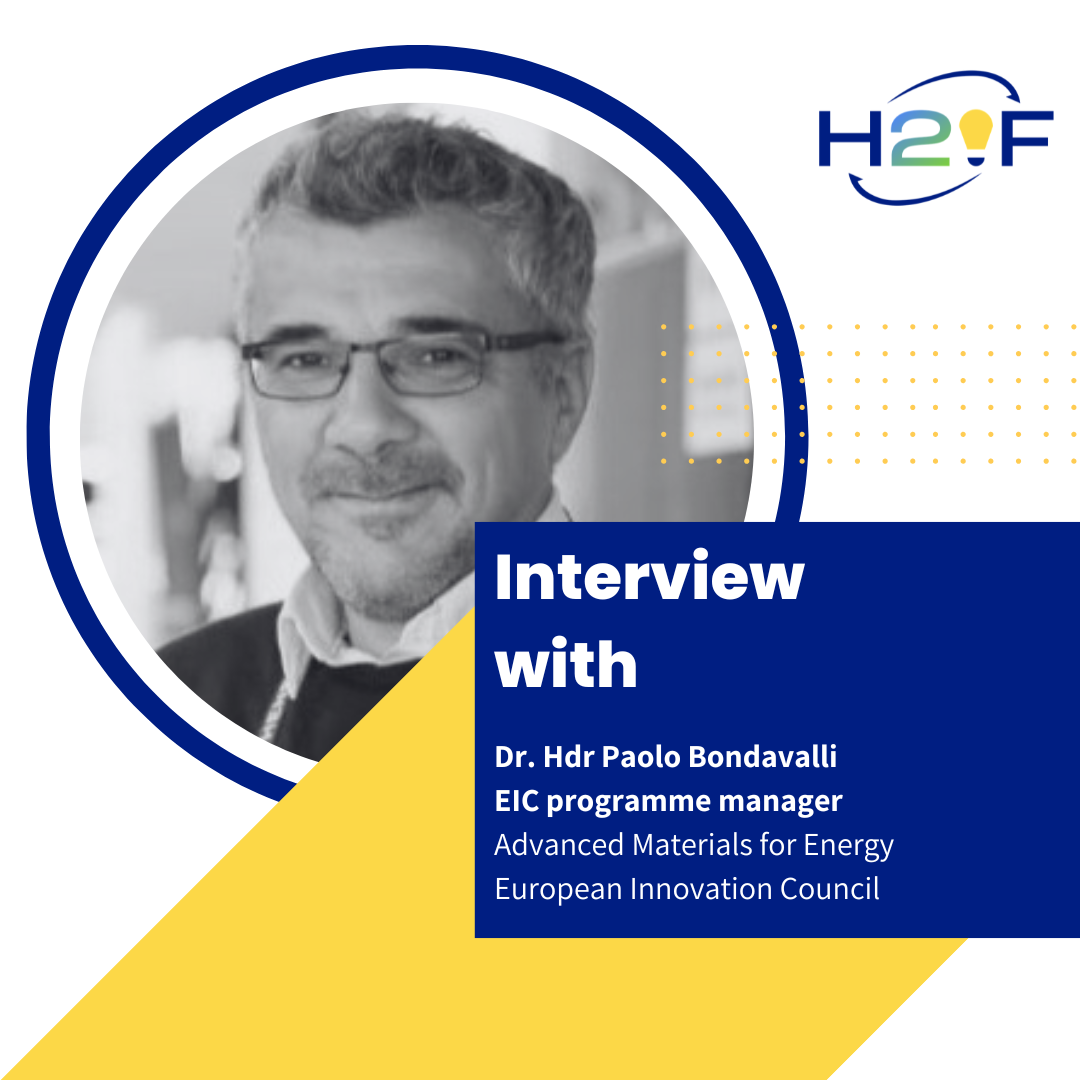
H2IF has conducted an interview with Dr. Hdr Paolo Bondavalli, EIC Programme Manager, Advanced Materials for Energy, European Innovation Council. The interview focused on the importance of the European Innovation Council Accelerator Programme in supporting innovative start-ups and scale-ups across Europe. The interview delved into ways in which high potential businesses within areas like energy storage and renewable energy can be further assisted as they grow and bring new technology to market.
The interview also touched on the existing disconnect between research and innovation (R&I) and successful market deployment. In addition, lessons learned and best practices were shared regarding how to enhance the innovation landscape across Europe and enable breakthrough innovation to scale up effectively.
Can you briefly describe the EIC Accelerator program, and why this is particularly relevant for SMEs/scale-ups, willing to upscale their R&I results to the market?
The Accelerator is the final stage of various projects organized by the EIC to move from research through innovation and reach the market. This represents an important stage as it enables the scaling up of innovations that managed to go through the developmental and research phases. For start-ups and SMEs, to have access to such a program is paramount since, apart from the funding required to scale up, it also attracts investors since the impact of being chosen is of high importance in the competitive process of the Accelerator.
What do you see in terms of scale up of R&I results to market deployment and commercialisation? Is this common? Do you see a trend (e.g., very little R&I / mostly R&I)?
Although scaling-up R&I has benefits, there are specific factors to be considered when doing so. These factors include defining the business case and business model to carry the innovation to market. This is achieved by considering competitors and understanding the value of innovation vis-à-vis its competitors to ensure that it becomes market-ready. Moreover, an effective IP (Intellectual Property) strategy is imperative since it gives the company a competitive advantage, where the company can highlight its unique selling proposition. An IP strategy, however, can be threatened by regulatory barriers. Thus, the company should have a clear understanding of these barriers and how to adhere to them.
What are the most common complementary funding options used by those entities that got funding from your organisation? How does the presence of additional funding influence your decision to award your funding?
As a program manager, I don’t take part in selecting companies during the interview stage. My role is limited to posing questions on specific topics, such as the Deeptech aspects of the
challenge. While securing additional funding is a benefit, it’s essential for the company to justify why the EIC’s contribution is necessary. A well-defined strategy for how the funding will be used and its complementarity with other resources must be clearly articulated. I recommend that candidates disclose all details to provide a comprehensive overview of their strategy, ensuring transparency and leaving no aspects hidden.
Do you have best practices on preparing the short and full proposals? And the pitch? (e.g. do’s & don’ts)
First, it is necessary to have a robust understanding of the innovation content. Innovation is all about Deeptech, and you need to start by defining those aspects of your innovation. You need to feel confident and convinced about the relevance of your innovation that you propose. An important aspect is recognizing a business model and, of course, a business case. This is essential in understanding its position among other competing innovations or existing products. The value of the proposal is significantly increased by having a thorough roadmap strategy for implementing the innovation within the market with clear milestones. When conducting the interview, make sure each team member contributes to the presentation and discussion. Try to highlight their complementarities. Lastly, it is important to be up front during the proposal by presenting all necessary information during the proposal, as well as dealing with possible issues.